
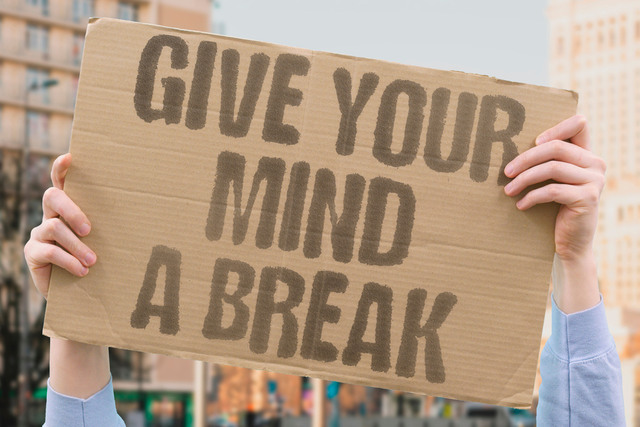
It’s rare for individuals to remember a time their brain was idle. Not sleeping — that’s different. We are describing a time during waking hours when there were no outstanding tasks, no screens were active, and no mental lists were being processed. Many of us haven’t experienced that kind of quiet for ages.
Running on Fumes Feels Normal After a While
Think about all the browser tabs you have had open this week. Still active and using up memory. That is an excellent summary of your current mental state. Work stuff bleeds into dinner. Dinner conversations replay at 2 a.m. Despite everything, the news still finds a way to get through.
Neuroscience supports what many of us intuitively sense. Constant mental exhaustion increases cortisol, impairs memory, and weakens concentration. Your reaction time suffers. Creative thinking tanks. And the worst part? You stop noticing the decline because you’ve been running that way so long it just feels like who you are now.
Rest Means More Than Sleep
Sleep matters — obviously. But mental rest is its own category. It’s about pulling back from stimulation on purpose. No puzzle to crack. Nothing to respond to. Just… space.
People get there in different ways. Meditation is the obvious one. Sitting outside with no phone works too. Journaling does the trick for some folks. And then there are more immersive paths; a sound bath, for instance, where layered tones and vibrations give the mind permission to stop managing everything for a while. Maloca Sound has developed real depth in how these sessions are composed, matching specific frequencies and instruments so the brain can actually drop into a restful state instead of just getting distracted by pleasant noise.
What matters isn’t the method. It’s whether your brain shifts out of task mode and into something softer.
Your Brain Has a Hidden Gear
Back around 2001, researchers at Washington University stumbled onto what they called the Default Mode Network (DMN). It fires up when you’re not locked into a specific task. Daydreaming, wandering thoughts, quiet reflection. That’s the DMN doing its thing.
Here’s why that matters. The DMN drives creativity. It helps you process emotions. It builds self-awareness. But it basically can’t do any of that while you’re grinding through a to-do list or doomscrolling. It needs idle time. Real idle time. Individuals who regularly include downtime in their week often exhibit enhanced working memory. They also have a healthier prefrontal cortex. The prefrontal cortex is the region handling planning. It also handles impulse control and big-picture thinking. Resting literally makes the hardware work better.
The Guilt Problem
Americans have a weird relationship with doing nothing. Being still feels like a dereliction of duty. Our culture dictates that inactivity means falling behind. That narrative doesn’t reflect the actual situation though. Countries that allow for real breaks consistently show higher productivity for each hour worked. Exhaustion isn’t an honor. It’s a warning light.
Conclusion
Forget the silent retreat. Forget the perfect morning routine. Just try ten minutes. Take a seat somewhere and put your phone away. Breathe. Allow your thoughts to pass through without holding onto them. That’s it. No app required. Do it a handful of days in a row and something shifts. Sleep gets a little easier. Reactions slow down in a good way. There’s a gap between a stressful moment and your response that wasn’t there before — and that gap changes everything. Your mind has been hauling weight for a long time. It doesn’t need a vacation. It just needs you to stop piling on, even briefly. That small offering pays back more than most people expect.